One of the most common questions people ask when considering an electric adult trike is: “How far can I go on a single charge?”
The answer depends on several factors, including the battery size, level of pedal assistance, terrain, rider weight, weather conditions, and how the trike is being used. The good news is that modern electric tricycles for adults are designed to provide reliable, practical range for everyday leisure rides, longer outings, and regular use.
For many riders, battery range becomes far less of a concern once they understand how electric pedal assist actually works and how efficiently modern systems support the rider.
If you are new to electric cycling, our guide to who benefits from electric pedal assist explains how electric assistance supports your pedalling rather than replacing it.
How Electric Pedal Assist Works
Electric adult trikes use a pedal assist system, meaning the motor only provides support while you are pedalling. The rider remains fully involved in the cycling experience, while the motor reduces strain and effort when needed.
Most electric trikes allow riders to select different assistance levels depending on the terrain or how much support they would like:
- Lower assistance levels help maximise battery range
- Higher assistance levels provide more support on hills or longer rides
- Assistance can be adjusted throughout a ride as conditions change
Because the motor works alongside the rider rather than independently, battery usage is often far more efficient than people expect.
What Affects Electric Trike Range?
There is no single fixed distance that applies to every electric trike. Instead, range varies depending on how and where the trike is ridden.
The main factors affecting battery range include:
Terrain
Hilly routes require more motor support and use more battery power than flatter routes.
Assistance Level
Using maximum assistance continuously will reduce overall range more quickly than lower support settings.
Rider and Cargo Weight
Additional rider weight, shopping, luggage, or accessories increase the load on the motor and battery.
Weather Conditions
Strong headwinds and colder temperatures can affect battery efficiency and increase energy usage.
Tyre Pressure and Maintenance
Correct tyre pressure and regular maintenance help the trike roll more efficiently, reducing strain on the motor.
How Far Can an Electric Adult Trike Go?
Most modern electric adult trikes comfortably support everyday riding distances, leisure cycling, and day trips. Many riders find they can travel far further than expected because the electric support reduces fatigue throughout the ride.
For some people, electric assistance makes cycling achievable again after years away from riding. Hills feel less intimidating, longer routes become manageable, and riders often feel more confident planning regular outings.
If confidence, comfort, or physical effort are concerns, you may also find our guide on whether an adult trike is right for you helpful.
Battery Life vs Battery Range
Battery life and battery range are often confused, but they mean different things.
- Battery range refers to how far you can ride on a single charge
- Battery lifespan refers to how long the battery itself lasts over months and years of use
Modern lithium-ion batteries are designed to last for many charging cycles and years of normal riding when properly cared for.
Most riders simply develop a routine of charging their trike after rides or before longer journeys, much like charging a mobile phone or other rechargeable device.
Tips for Maximising Battery Range
There are several simple ways to improve electric trike efficiency and extend riding range:
- Use lower assistance levels where comfortable
- Change gears appropriately rather than relying entirely on motor power
- Maintain correct tyre pressure
- Avoid unnecessary weight where possible
- Keep the battery charged regularly
- Store the battery in moderate temperatures when not in use
Learning how to balance gears and assistance levels becomes natural with experience and helps riders get the best performance from their trike.
Our guide to your first ride on an electric adult trike explains how riders typically adapt to electric cycling and assistance controls.
Why Range Anxiety Often Disappears Quickly
Many first-time riders worry about running out of battery power before they return home. In reality, most people quickly realise that modern electric trikes are extremely practical for the types of journeys they regularly make.
As confidence grows, riders often begin cycling more frequently, travelling further, and using their trike for a wider variety of activities.
For many adults, the bigger benefit is not simply how far the trike can go — it is the freedom, comfort, and confidence that electric support helps restore.
That added sense of confidence and stability is often what encourages riders to cycle more regularly again.
Choosing the Right Electric Trike Setup
Battery performance is only one part of the overall riding experience. Comfort, seating position, handling, accessibility, and rider support all play an important role in how enjoyable and practical a trike feels day to day.
At Tomcat, every rider assessment focuses on matching the right trike setup to the individual rider’s needs and goals. Features such as supportive seating, stable handling, transportability, and electric assistance can all be tailored to suit different riders.
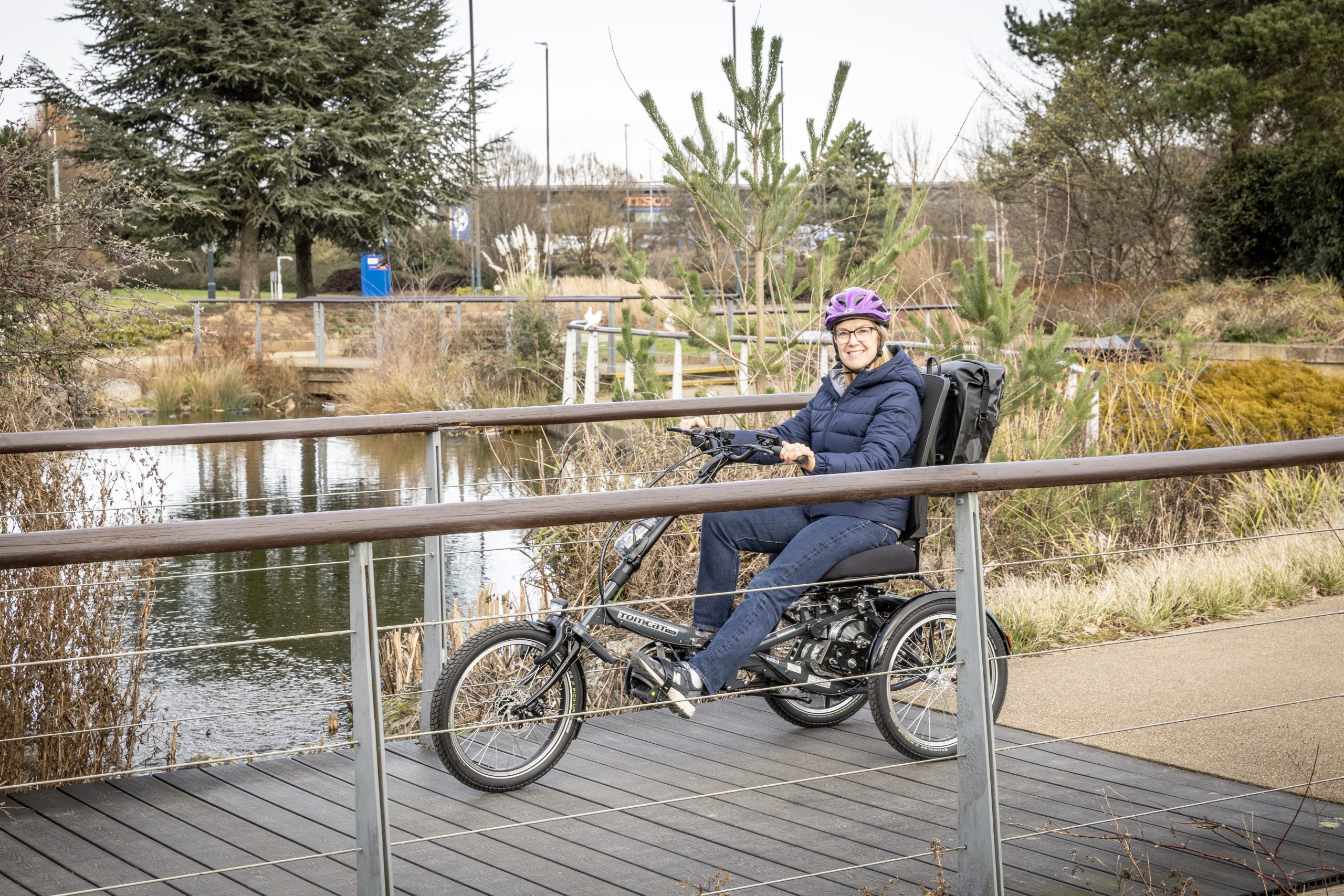
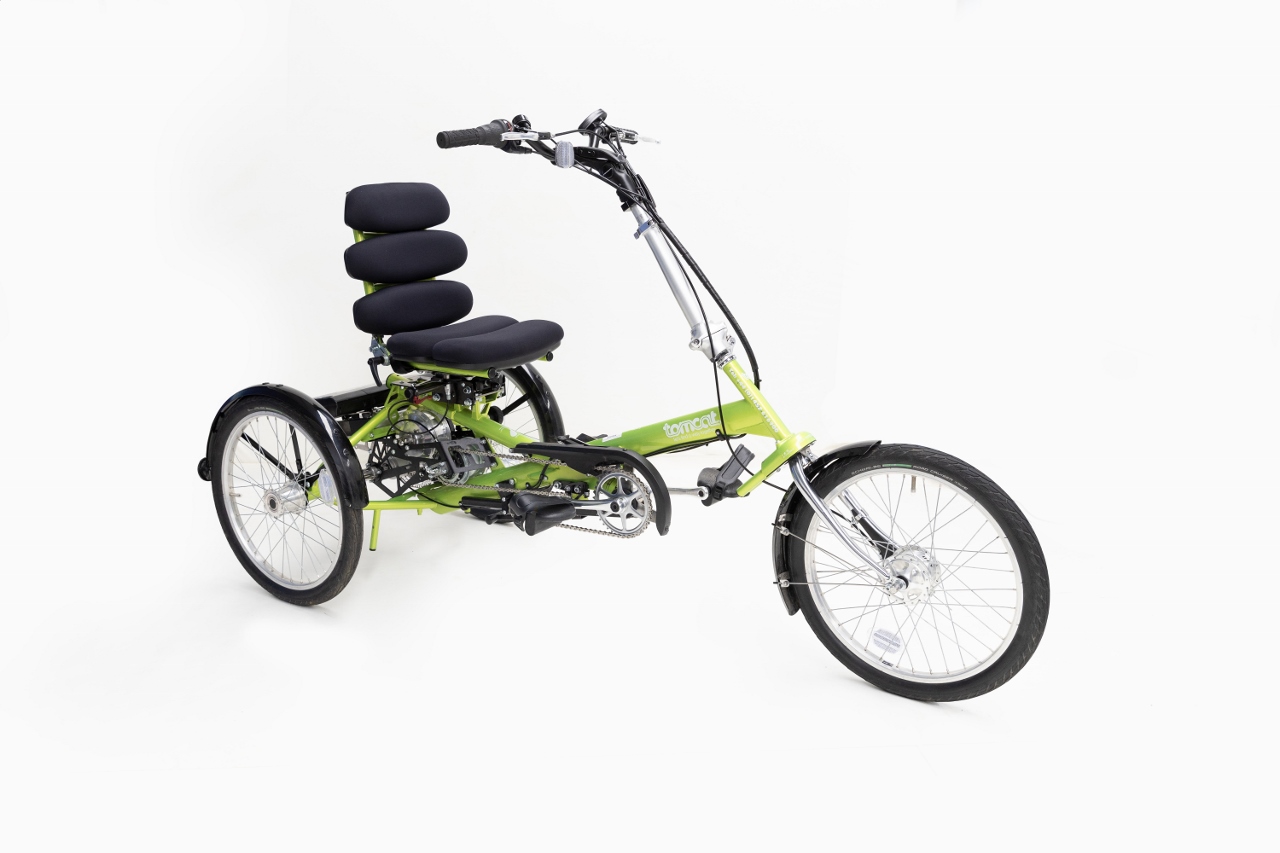
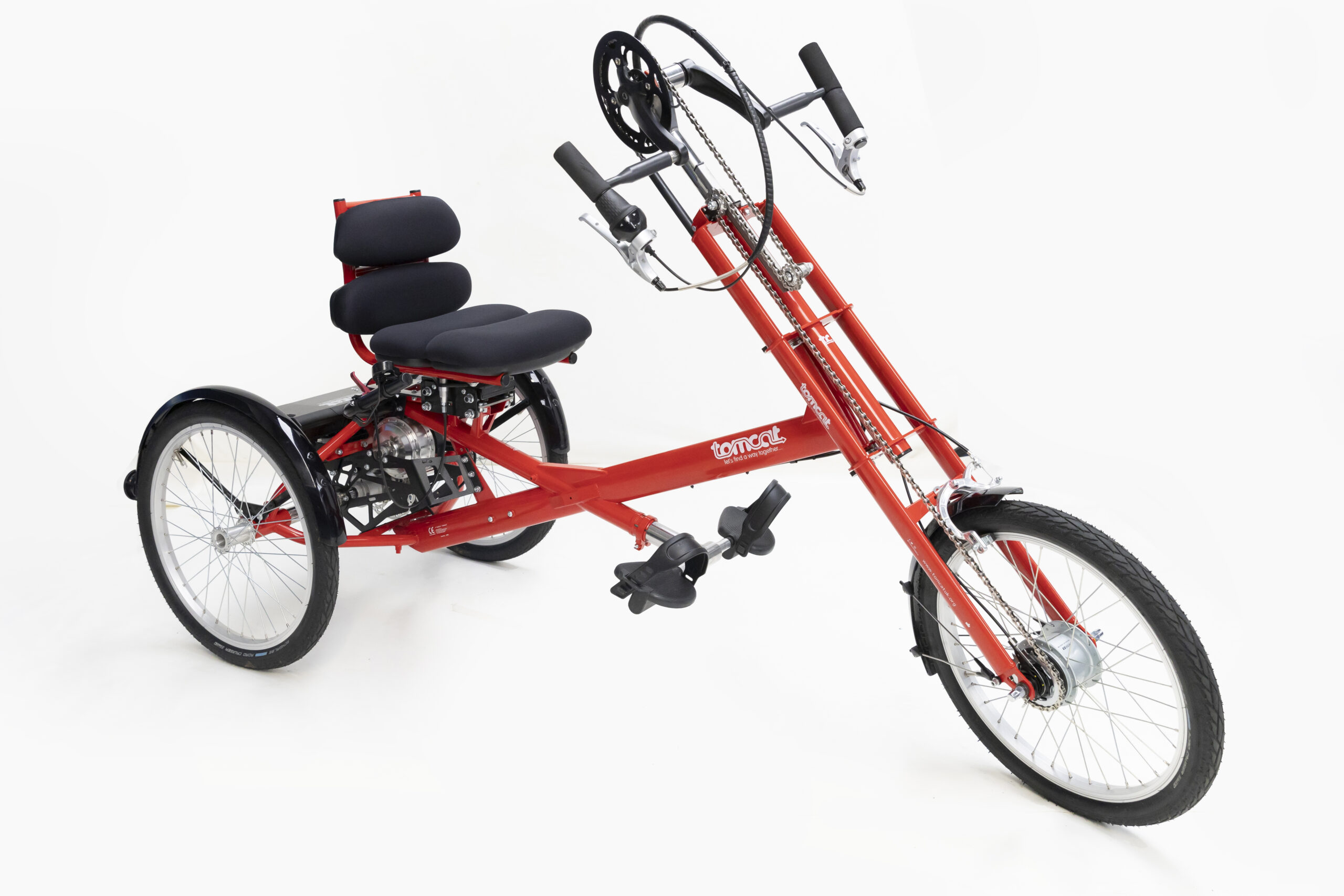
Many adults begin with models such as the Tomcat Flame, designed to combine stable handling with smooth electric pedal assistance and everyday comfort.
If transport and storage are important considerations, our guide to choosing an easy-to-transport adult trike may also help.
Book a Ride and Experience It Yourself
The best way to understand electric trike range and battery performance is to experience it firsthand.
Many riders are surprised by how natural electric pedal assist feels and how much confidence it gives them to ride further and more comfortably.
You can book a one-to-one assessment to explore different electric trike options and find the right setup for your riding needs.
Where to Go Next